
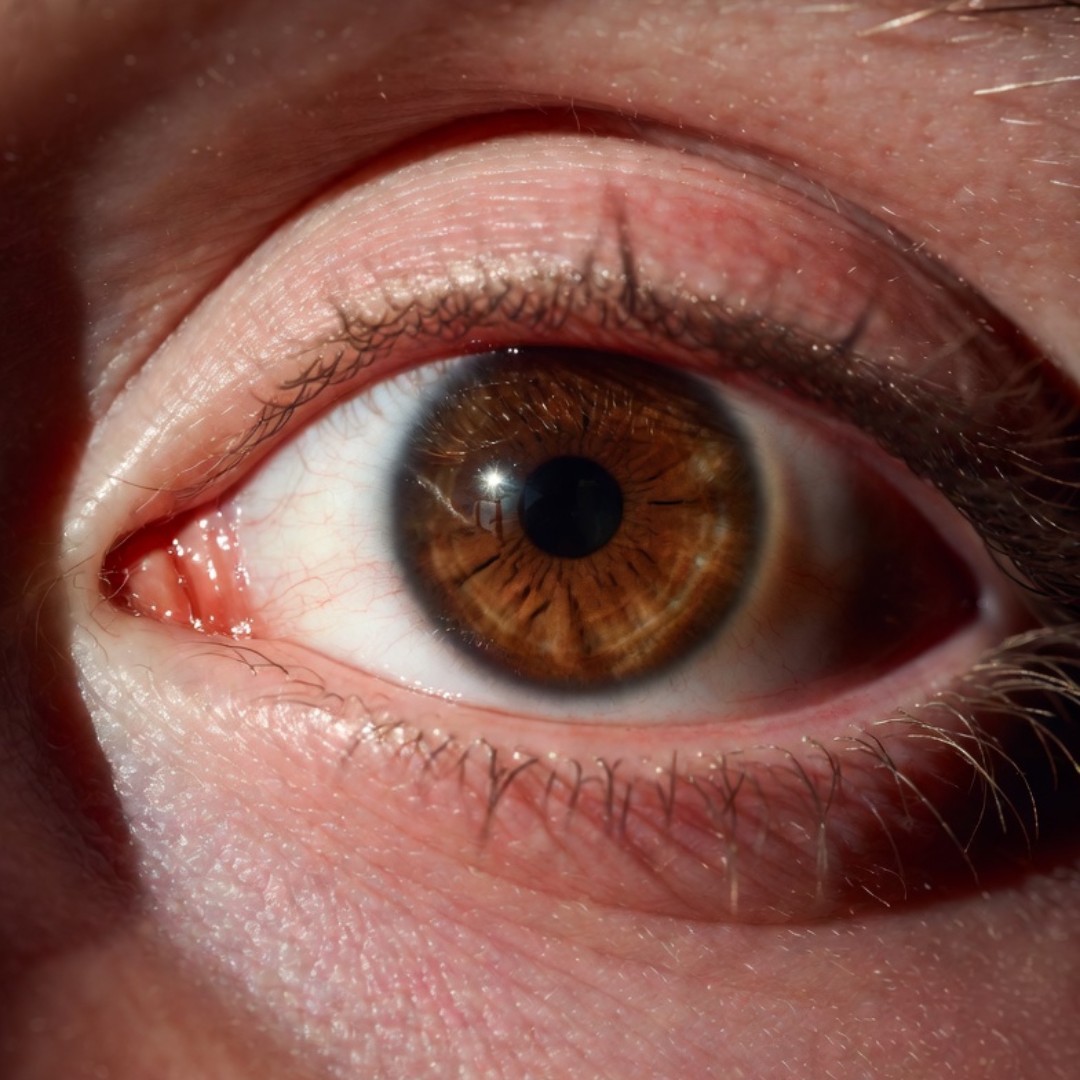
When people hear “eye inflammation,” they usually think of something minor: allergies, too much screen time, maybe a red, irritated eye that clears up with rest or basic drops.
Uveitis is not that.
This is inflammation inside the eye, often in the front part (anterior uveitis), and it can be rough—pain, redness, blurred vision, and the kind of light sensitivity that makes ordinary daylight feel punishing. For many patients, it doesn’t just happen once. It comes back. And when it keeps flaring, it starts interfering with normal life fast: work, driving, reading, all of it. Managing it can become a long-term effort just to protect vision.
For years, the standard treatment has been steroid eye drops such as prednisolone acetate. They work, and they often work quickly, which is why they remain a first-line option for many patients.
But steroids come with a known problem: they can raise pressure inside the eye (intraocular pressure, or IOP). That’s a serious issue for people who already have glaucoma or are at higher risk. Over time, elevated pressure can damage the optic nerve and increase the risk of vision loss.
That’s why TRS01 (dazdotuftide) is drawing attention. It’s a steroid-free drop being developed for noninfectious anterior uveitis, and the appeal is pretty straightforward: it appears to avoid much of the pressure-related downside that makes steroids difficult for some patients.
Phase 3 results from the TRS4VISION trial, published in early 2026 in the American Journal of Ophthalmology, showed a mixed but important picture. Steroids performed better on the main measure of completely clearing inflammatory cells in the front chamber. By day 28, about 68% of patients on prednisolone reached zero cells, compared with roughly 46–48% on TRS01. On that headline endpoint, TRS01 fell short.
Still, that’s not the whole story. TRS01 was comparable (noninferior) on measures such as reducing flare and easing eye pain, and its IOP safety profile was notably better. There were no major pressure spikes and fewer patients crossed higher-risk pressure thresholds, especially among those who responded well to treatment.
And in real clinics, that matters. The “best” drug isn’t always the strongest one on a single endpoint. It’s the one a patient can use safely. For someone with a history of steroid-related pressure problems—or uveitis layered on top of glaucoma risk—TRS01 could be a very meaningful option, even if it doesn’t replace steroids across the board.
For now, it’s still a pipeline drug. Tarsier Pharma has FDA agreements on next steps, including a focused follow-up trial protocol, more data is still coming, and approval is not guaranteed. But for patients dealing with recurrent uveitis, a treatment that targets inflammation without the usual steroid baggage looks less like a niche idea and more like a real step forward.