Cultivated meat is no longer just a lab concept, but it is also nowhere near mass-market scale.
In 2026, the field sits in an awkward middle stage: the science has advanced, a small number of products have reached limited commercial sales, and regulators in a few countries have opened the door. At the same time, the industry is still wrestling with the hard part — making real meat from animal cells at a cost, scale and consistency that can compete with conventional products.
That gap between technical progress and commercial reality is the story now.
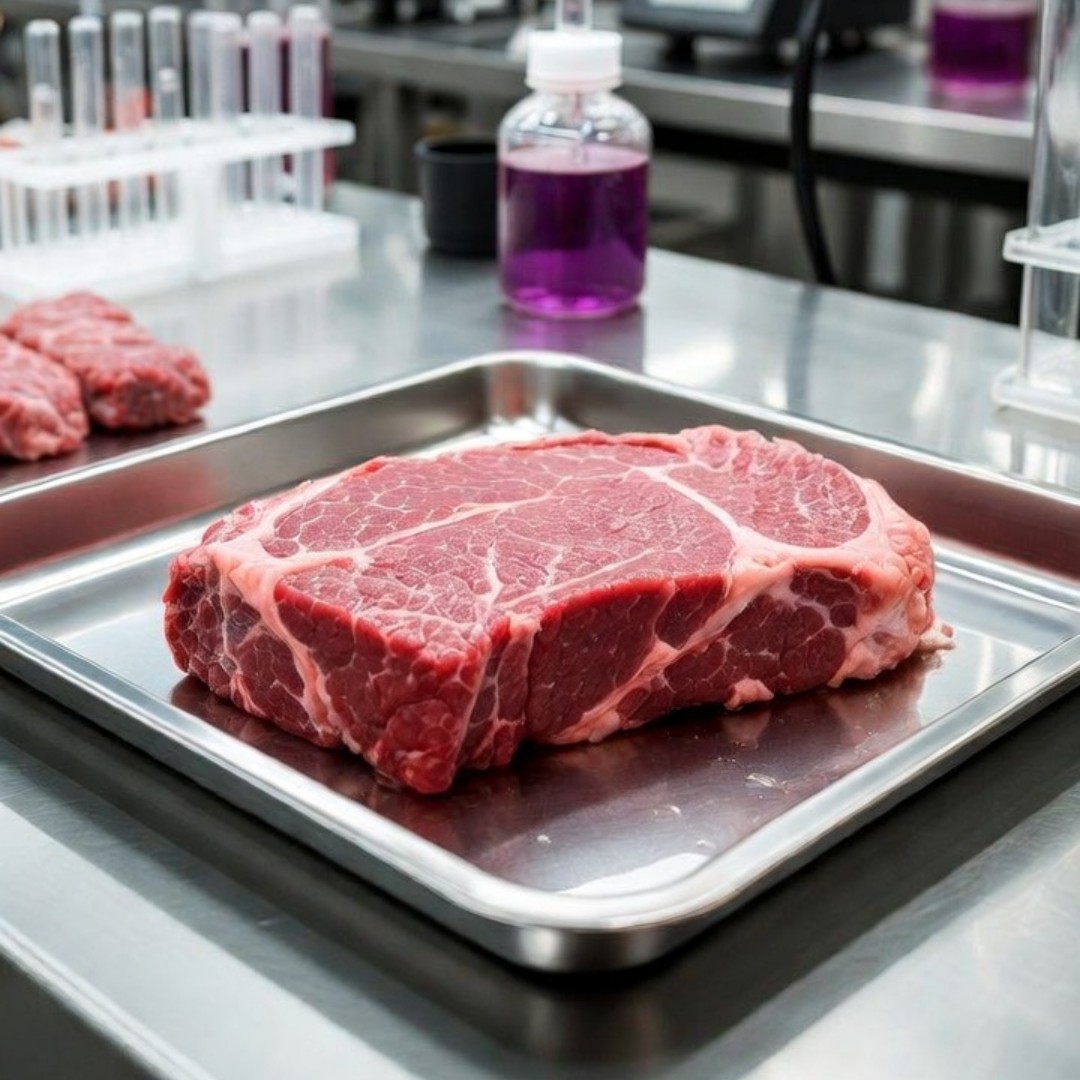
Cultivated meat is made by growing animal cells — usually collected from a small biopsy — in controlled production systems. Those cells are fed nutrients and guided to multiply and develop into tissues such as muscle and fat. The result is biologically real animal tissue, produced without raising and slaughtering animals in the usual way.
The process has improved in important ways. Companies and researchers have spent years trying to reduce reliance on expensive ingredients in growth media, improve cell growth efficiency, and build products with better texture. Recent reviews describe progress in serum-free media, scaffolding approaches, and bioprocess design, but also emphasize that scale-up remains a major engineering challenge rather than a solved problem.
That distinction matters because many public claims about cultivated meat were made when the technology was still earlier in development. It is one thing to produce a promising product in small volumes. It is another to run large, reliable production systems, keep contamination risk low, control costs, and deliver a product people will actually buy more than once.
Regulation is also moving — unevenly. Singapore and the United States remain among the most advanced markets for human food approvals, and Australia’s regulatory system approved its first cultivated meat product in 2025. In the U.S., approvals have expanded beyond chicken to include cultivated seafood and cultivated pork-fat ingredients in specific cases, depending on the product and regulator. But access is still limited, and state-level bans in parts of the U.S. have created a patchwork market.
Environmental impact is one of the biggest unresolved debates. Some studies and industry-backed assessments project major reductions in land use and potentially lower emissions than conventional beef under favorable conditions. Other analyses, especially those modeling current or near-term production methods, suggest energy demand and upstream inputs could make impacts much higher than early headlines implied. Researchers in the field have increasingly called for better, more standardized life-cycle assessments instead of sweeping comparisons.
That does not mean the sustainability case is dead. It means the answer depends heavily on how production evolves: energy mix, media ingredients, manufacturing efficiency, and what product category is being compared (for example, beef versus chicken versus premium seafood). In other words, the environmental promise is possible, but not automatic.
On nutrition and safety, the picture is also more nuanced than the hype cycle suggested. Cultivated meat can potentially be designed with different fat profiles, and production in controlled environments may reduce some risks tied to conventional supply chains. But product-by-product oversight still matters, and broad claims should be treated carefully until more commercial products are on the market and more real-world data is available.
Commercially, the near-term path looks narrower than the early “replace meat” narrative. The most realistic routes appear to be limited launches, premium categories, hybrid products (combining cultivated ingredients with plant-based inputs), and specialty items where conventional supply is expensive, unstable, or ethically contentious. That is a more modest story than disruption-at-scale — but it may also be the more credible one.
So where does cultivated meat stand in 2026? Not failed, not mainstream, and not imaginary. It is a real technology in early commercialization, with genuine scientific progress behind it and equally real economic and manufacturing constraints in front of it.
The next few years will matter less for big promises than for boring proof: can companies make products consistently, pass regulators, lower costs, and sell beyond novelty? If they can, cultivated meat may earn a durable place in the protein market — not as a total replacement for livestock, but as part of a broader mix of food technologies.
Sources: Recent peer-reviewed scientific reviews and life-cycle assessment literature (2024–2026); regulatory updates and approvals in the U.S., Singapore, and Australia; industry and company announcements.