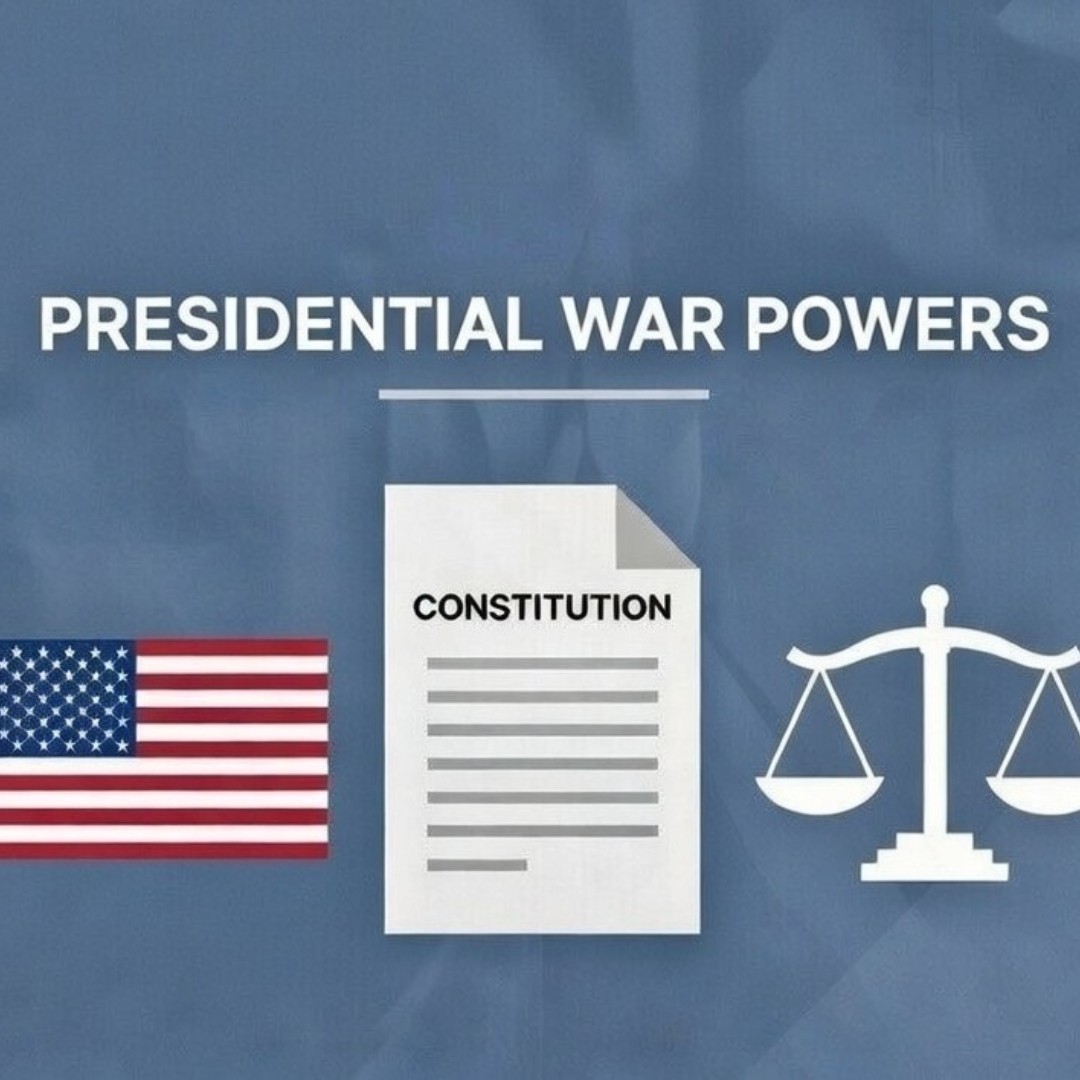
The U.S. president holds real authority as head of the executive branch — commanding the military, shaping foreign policy, and overseeing how laws get carried out. But those powers come with clear limits written into the Constitution to stop any one person from acting like a king.
Here’s exactly what the job allows, straight from the document that created it.
The foundation is short and direct. Article II, Section 1 of the U.S. Constitution states: “The executive Power shall be vested in a President of the United States of America.” That single sentence means the president runs the day-to-day operations of the federal government — enforcing the laws Congress passes, managing federal agencies, and directing the executive branch.
The most visible power is commander-in-chief. Article II, Section 2 makes the president the top boss of the Army, Navy, and (when called up) the state militias. In practice this lets the president order military action, though Congress holds the power to declare war and control the budget.
The president can also issue pardons and reprieves for federal crimes — except in cases of impeachment — and demand written advice from cabinet secretaries. These are direct, solo authorities.
On the diplomatic side, the president negotiates treaties and picks ambassadors, Supreme Court justices, and other top officials. None of that sticks without the Senate’s “advice and consent.” Treaties need a two-thirds vote of senators present; most appointments need a simple majority. The president can temporarily fill vacancies when the Senate is in recess, but those commissions expire when the next session ends.
Day-to-day influence comes through Section 3. The president must deliver a State of the Union address, can suggest laws to Congress, and may call special sessions or adjourn Congress if the two chambers can’t agree on timing. The president also receives foreign ambassadors and, most importantly, “shall take Care that the Laws be faithfully executed.” That phrase is the legal backbone for running the government and issuing executive orders that tell agencies how to apply existing laws.
The president can also veto bills passed by Congress. (That power actually sits in Article I, Section 7, but every president uses it.) Congress can override a veto with two-thirds majorities in both the House and Senate.
None of this adds up to unlimited power. The Constitution deliberately splits authority. Congress writes the laws and controls the money. The courts can strike down presidential actions they deem unconstitutional. The Senate confirms — or blocks — the president’s key picks. And the ultimate check is impeachment by the House and removal by the Senate for “Treason, Bribery, or other high Crimes and Misdemeanors.”
In plain terms: the president is powerful, but never alone. Every major move faces pushback from the other two branches, exactly as the framers intended after living under a monarchy.
That balance is why the job looks different depending on the moment — a crisis can expand what a president does in practice, while a divided Congress can shrink it. The rules themselves haven’t changed since 1787.
Sources: U.S. Constitution (Article II, Congress.gov), USA.gov.