
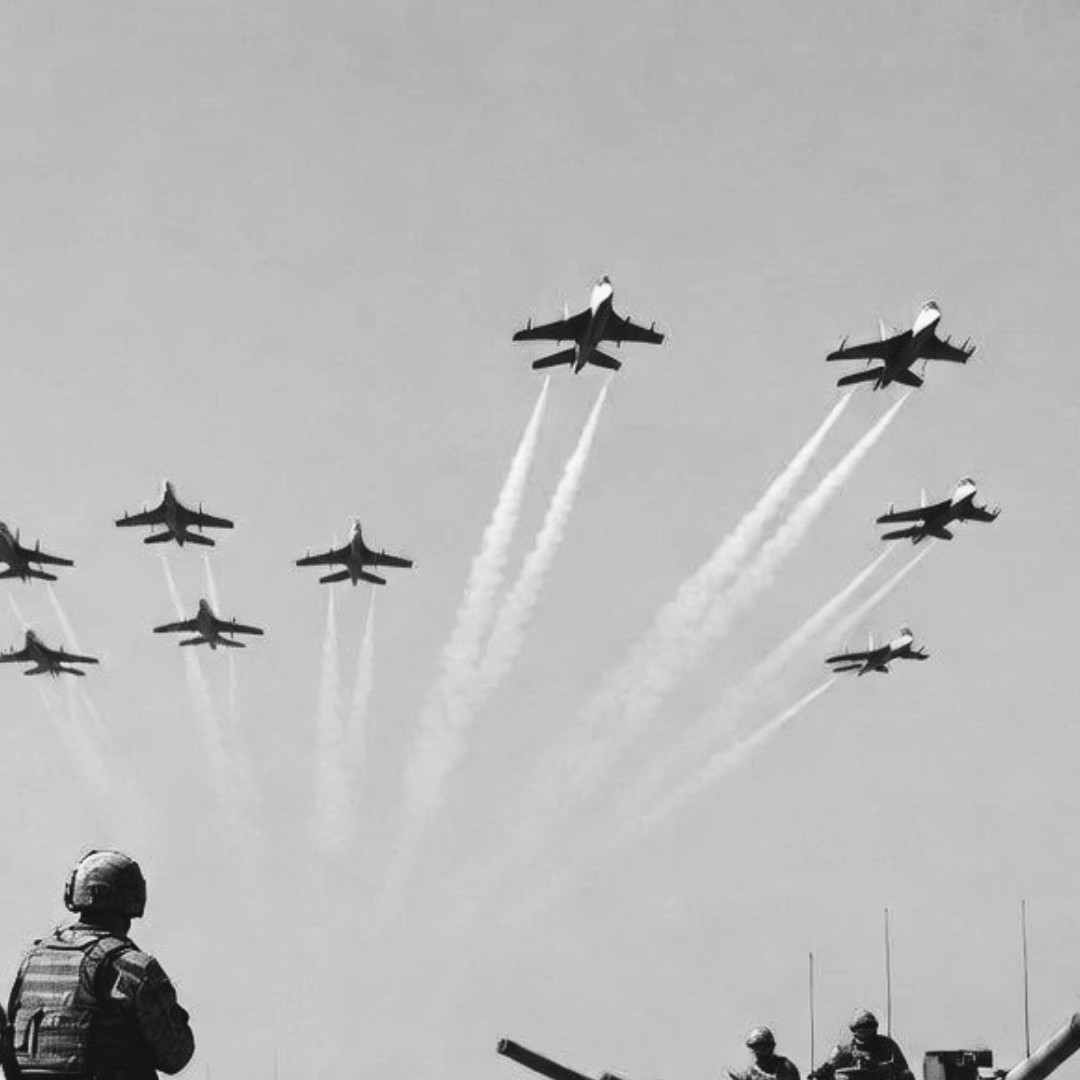
Advance notice of major military exercises has become routine for many states, and not just for planning. Governments use these announcements to train forces, signal resolve, reassure allies, and reduce the risk that a rival misreads routine activity as preparation for an attack.
That pattern is visible across regions. When Beijing announced large-scale drills around Taiwan in late 2025, it framed them as a warning to separatist forces and outside interference. More recently, the United States and South Korea publicized their Freedom Shield exercises for March, presenting them as defensive readiness training in response to North Korean threats. In both cases, the announcement was part of the message.
In Europe, some of the clearest rules sit inside the OSCE’s Vienna Document, a confidence-building framework designed to reduce miscalculation around military activity. Broadly, participating states are expected to notify others in advance when exercises cross certain thresholds, and larger exercises can trigger observer provisions. The logic is simple: make training more visible so it is less likely to be mistaken for mobilization.
Those rules grew out of Cold War-era efforts to lower the risk of surprise and escalation. They do not remove distrust, but they create a process for advance notice and monitoring that can help contain it.
Transparency, though, is only part of the story. Public announcements also work as political and strategic signals. NATO exercises on its eastern flank can reassure allies by showing reinforcement plans, interoperability, and readiness. Russian exercises, including the Zapad series, have likewise served both training and messaging purposes, signaling scale and intent to neighbors and adversaries.
A similar dynamic appears in the Indo-Pacific, even without an equivalent region-wide regime. U.S.-South Korean drills are announced in advance partly for military coordination and partly to show alliance readiness. Chinese drills around Taiwan are often timed to political developments and can function as both operational preparation and coercive signaling.
Advance notice can also add credibility. Once a government publicly commits to a visible exercise, backing away may carry political costs at home and abroad. In that sense, announcements can reinforce deterrence messaging as much as the drills themselves.
But this approach has limits. What one side describes as defensive reassurance may be read by the other as provocation — a familiar security dilemma in both Europe and Asia. There are also exceptions and gray areas: some states have used snap drills, some disclosures leave out meaningful context, and disputes over troop counts or exercise scope can undermine confidence even when notice is given.
Even so, advance notice remains one of the few practical tools states use to manage rivalry short of direct conflict. It does not eliminate tension, but it can reduce uncertainty while allowing governments to train, signal, and test readiness in public view.
Sources used:
OSCE (Vienna Document framework)
Reuters / AP (Freedom Shield announcement reporting)
Official defense ministry statements
Secondary analysis (e.g., defense policy research)